Green Mold (Trichoderma) in Mushroom Grows: How to Spot and Prevent It
Green mold in your mushroom grow? How to recognize Trichoderma, what causes it, whether you can save the batch, and how to prevent it next time.
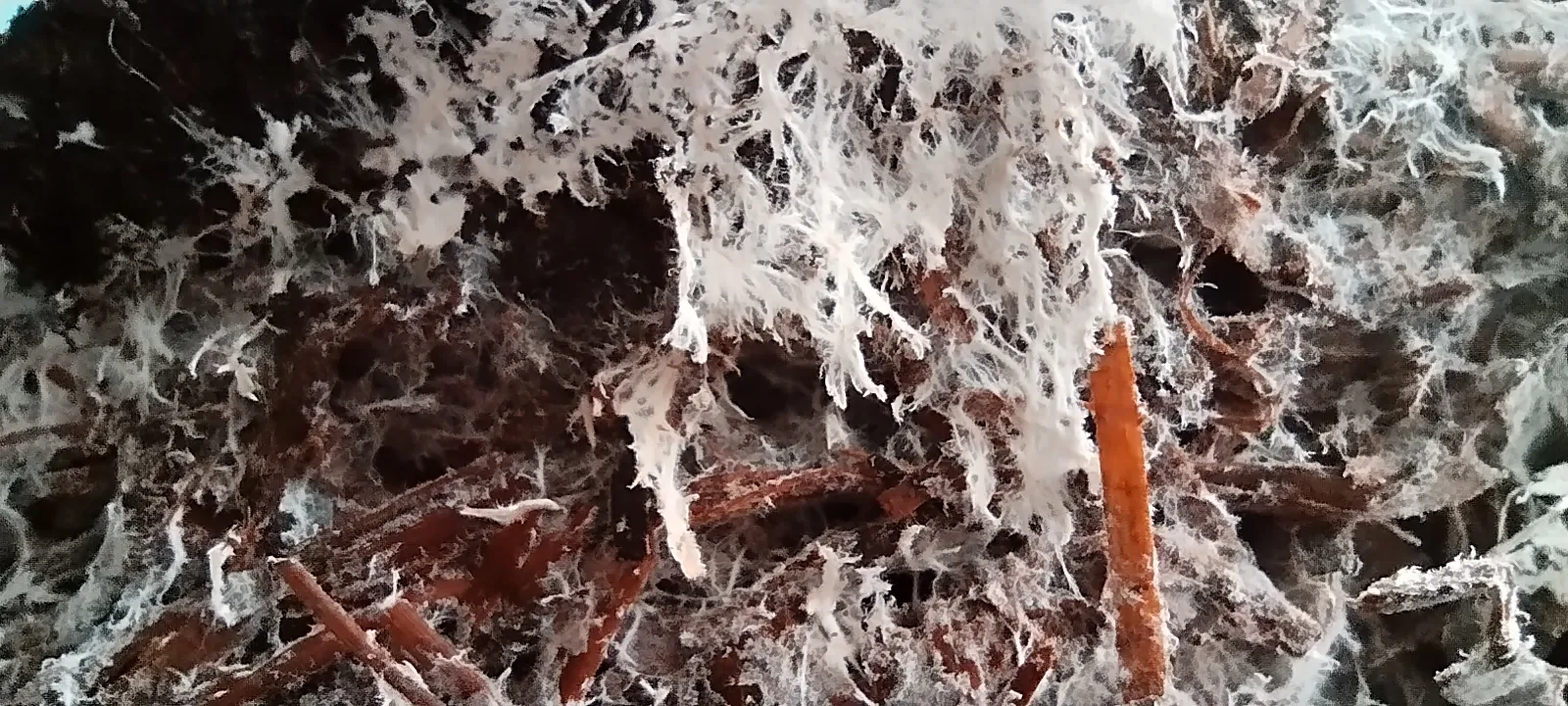 Photo: Ірина Бучнєва, CC BY 4.0
In this guide
Short answer: green mold in a mushroom grow is usually Trichoderma. It starts as white, fluffy growth that looks a lot like mushroom mycelium, then turns bright or dark green when it makes spores. Once a bag or jar is visibly green, it’s almost never worth saving. Seal it in a bag and throw it out away from your grow area. Prevent it with proper pasteurization or sterilization, clean technique, the right moisture and a healthy spawn rate.
How to recognize Trichoderma
| Stage | What you see |
|---|---|
| Early | Dense white patches, sometimes faster-growing than your mycelium |
| Sporulating | Patches turn light green, then dark green, often from the center outward |
| Late | Large green areas; the mushroom mycelium stops spreading |
The tricky part: in the early stage it looks like healthy mycelium. The giveaway comes a day or two later, when the color changes.
Not every color is Trichoderma:
- Yellow liquid droplets (metabolites) on healthy mycelium are a stress response, not mold.
- Blue-green staining on some mushroom species can be natural bruising.
- Black, orange or pink patches are other molds or bacteria, also signs of contamination.
Why it happens
Trichoderma spores are everywhere in soil, dust and air. A grow gets contaminated when the spores get in and have a chance to beat the mushroom mycelium:
- Substrate not pasteurized or sterilized well enough, especially nutrient-rich sawdust with bran
- Spores introduced while spawning: open air, unwashed hands, dusty room
- Too much water: standing water and soggy substrate help molds
- Low spawn rate: slow colonization gives competitors time
- Old or weak spawn
Research on commercial mushroom farms shows green mold can cause very large yield losses, so growers of all sizes take prevention seriously.
Can you save a contaminated grow?
Usually not.
- Visible green inside a jar or bag: discard it. Opening it releases spores.
- A tiny spot on the surface of a fruiting block: some growers cut it out with salt or alcohol, but it often comes back. Keep it far away from other grows.
- Grain spawn with any green: don’t use it. You’d spread spores into every bag you inoculate.
How to prevent it
- Treat the substrate properly. Pasteurize straw (see how to pasteurize straw); sterilize supplemented sawdust and grain in a pressure cooker.
- Work clean. Wipe surfaces and gloves with 70% isopropyl alcohol, work in a still air box when opening sterile items, and avoid drafts.
- Get the moisture right. Field capacity, not soggy. The squeeze test should release only a few drops. Our Substrate Calculator helps with dry materials.
- Use enough spawn. A higher spawn rate means faster colonization. 10–20% is a common range for bulk substrates.
- Start with fresh spawn from a reliable source.
- Keep colonization temperatures moderate. Very warm conditions favor many contaminants.
Frequently asked questions
Is green mold dangerous to touch?
Trichoderma is common in soil and isn’t considered a major health risk for healthy people, but don’t breathe in spores from moldy bags, and don’t eat mushrooms from contaminated grows.
Can mushrooms still grow next to green mold?
Sometimes they do, but yields are lower and the mold usually wins. Don’t eat mushrooms that touched mold.
Why did my bag go green after fruiting started?
Exposed, weakened substrate at the end of a flush is easier for mold to attack, especially if water pooled on the surface. Avoid misting directly onto the substrate.