Mushroom Fruiting Conditions: Humidity, Fresh Air, Light and Temperature
What mushrooms need to fruit: humidity of 85–95%, fresh air exchange, indirect light and the right temperature, plus what long stems, dry caps and no pins mean.
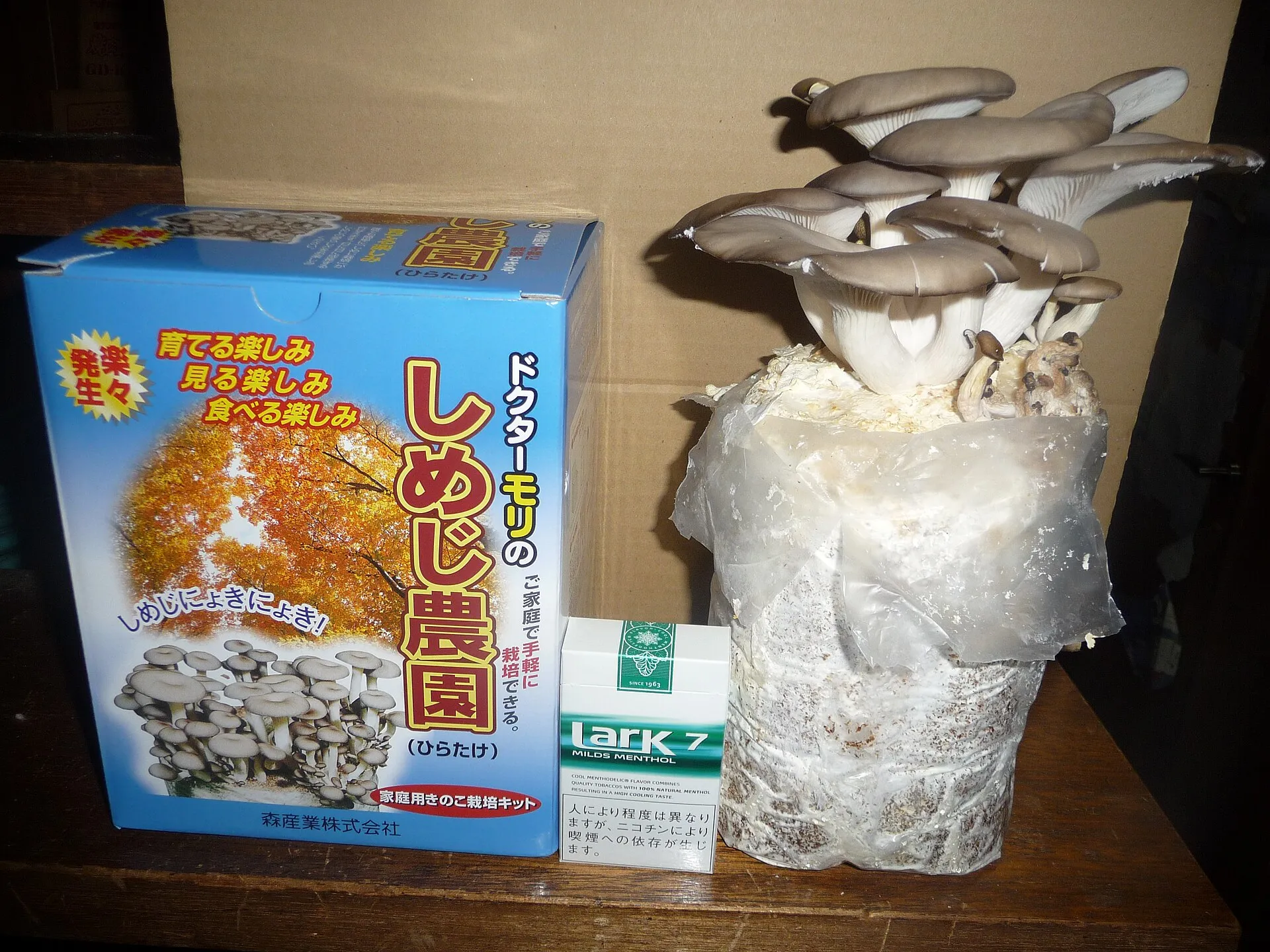 Photo: Chatama, Public domain
In this guide
Short answer: most gourmet mushrooms fruit when you give them high humidity (about 85–95%), plenty of fresh air, some indirect light and a slightly cooler temperature than during colonization. Most fruiting problems trace back to one of those four. Long, thin stems usually mean too little fresh air; cracked, dry caps mean too little humidity.
The four fruiting factors
| Factor | What mushrooms need | Signs it’s wrong |
|---|---|---|
| Humidity | About 85–95% around the mushrooms | Dry, cracked or yellowing caps; pins that stall |
| Fresh air | Several air exchanges per hour | Long stems, small caps, fuzzy feet |
| Light | Indirect light, like a bright room | Odd shapes, pale or weak growth |
| Temperature | Usually a little cooler than colonization | No pins, slow growth |
Humidity
Mushrooms are mostly water and lose it quickly through their surface. Without humid air, young pins dry out and stop growing.
- Mist the air and walls around the block, not the mushrooms directly. Water sitting on caps can cause spots and bacterial blotch.
- Use a humidity tent or tub to keep moist air around the block.
- Check with a hygrometer. Rooms feel more humid than they are.
Fresh air exchange (FAE)
Growing mycelium breathes out CO₂. When CO₂ builds up around the block, mushrooms stretch toward fresher air, giving long stems and tiny caps. Oyster mushrooms are especially sensitive.
- Fan the tent or open the tub several times a day.
- A “shotgun” fruiting chamber (a tub with many holes) balances air and humidity for several blocks.
- More fresh air also dries the air, so humidity and fresh air have to be balanced.
Light
Mushrooms don’t photosynthesize, but light tells them which way is “out” and helps them form normal caps. Normal indirect daylight or a room light on a regular day cycle is enough. Avoid direct sunlight, which dries and heats the block.
Temperature
Many species fruit best a little cooler than they colonize. For example, many oyster strains colonize well around 68–75 °F (20–24 °C) and fruit well around 59–70 °F (15–21 °C), though warm-weather strains like pink oysters prefer it warmer. Check what suits your species and strain.
Troubleshooting by symptom
| Symptom | Likely cause | What to do |
|---|---|---|
| No pins after 2 weeks | Not enough fresh air, light or humidity, or too warm | Increase air exchange and light, cool slightly |
| Long, thin stems | Too little fresh air | Fan more often, add holes |
| Cracked or dry caps | Low humidity | Mist the air more, use a tent |
| Pins form, then turn yellow and stop | Drying out, or water sitting on them | Mist the air, not the pins |
| Fuzzy white growth on stems | High CO₂ | More fresh air |
| Green or black patches | Contamination | See green mold in mushroom grows |
Frequently asked questions
How often should I mist mushrooms?
Often enough to keep humidity high: usually several times a day in an open room, less inside a tent or tub. Mist the air and walls rather than the mushrooms.
Do mushrooms need darkness to fruit?
No. Darkness is fine for colonization, but most mushrooms fruit better with some indirect light.
Why are my mushrooms growing sideways?
They grow toward light and fresh air. Turn the block or move the light so it comes from the direction you want.