How to Grow Oyster Mushrooms at Home: Step-by-Step for Beginners
Grow oyster mushrooms at home on straw or a ready-made block: what you need, pasteurizing, spawning, colonization, fruiting and harvest, with realistic timelines.
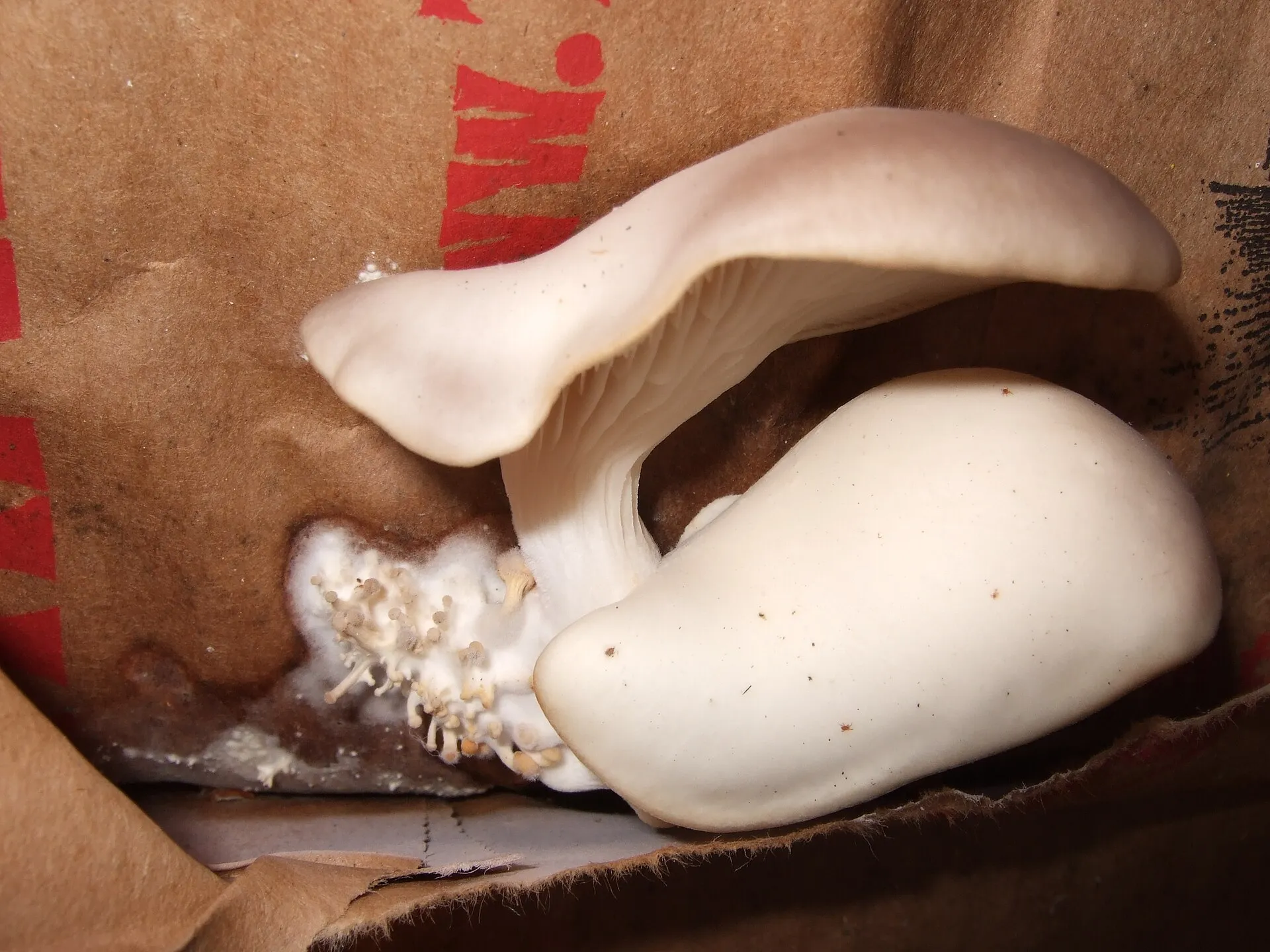 Photo: frankenstoen, CC BY 2.0
In this guide
Short answer: oyster mushrooms are the easiest mushrooms to grow at home. Mix grain spawn into pasteurized straw, pack it into bags, let the mycelium colonize for about 2–3 weeks in a warm, dark place, then move it to cooler, humid air with fresh air exchange. Mushrooms usually appear within 1–2 weeks after that. From start to first harvest, plan on about 4–7 weeks.
Why start with oyster mushrooms
- They grow on cheap, easy substrates like straw, sawdust and even coffee grounds.
- They colonize fast, which gives contaminants less time to take hold.
- They tolerate beginner mistakes better than most gourmet mushrooms.
- They come in many colors: grey, blue, pink, yellow and king oyster.
Want to compare species first? See the easiest mushrooms to grow at home.
What you need
- Grain spawn: oyster mushroom mycelium grown on grain, bought from a supplier
- Substrate: chopped wheat or oat straw (or hardwood pellets)
- A way to pasteurize: a large pot or bucket and a thermometer
- Grow bags or clear plastic bags with small holes
- A clean workspace, clean hands and gloves
- A fruiting spot: somewhere with indirect light, fresh air and high humidity
Step 1: Pasteurize the straw
Pasteurizing kills most competing organisms but leaves some harmless microbes that help protect the straw. The classic home method: soak the straw in hot water at about 160–170 °F (71–77 °C) for about an hour, then drain and let it cool. Details and other methods are in our guide to pasteurizing straw.
The straw should be damp, not dripping: a squeezed handful should release only a few drops of water.
Step 2: Mix in the spawn
Once the straw is cool (below about 80 °F / 27 °C), mix in the grain spawn. A spawn rate of around 10–20% of the wet substrate weight is a common starting point. Higher rates colonize faster. Our Substrate Calculator works out the amounts.
Pack the mix firmly into bags and poke small holes every few inches for air.
Step 3: Let it colonize
Keep the bags in a dark or dim place at about 68–75 °F (20–24 °C). Over 2–3 weeks, white mycelium spreads through the straw until the bag looks mostly white.
Step 4: Start fruiting
When the bag is fully colonized:
- Cut a few slits or X-shaped openings in the bag.
- Move it to cooler air, about 59–70 °F (15–21 °C) for most oyster strains.
- Keep humidity high (around 85–95%) by misting the air around the bag or using a humidity tent.
- Give it fresh air several times a day. Too little fresh air gives long, thin stems and small caps.
- Give it some indirect light, like a bright room without direct sun.
Small “pins” usually appear within about a week, and they grow fast from there. More detail in our fruiting conditions guide.
Step 5: Harvest
Harvest when the caps are fully formed but before the edges curl upward and drop lots of spores. Twist or cut the whole cluster off at the base.
After the first harvest (the first “flush”), rest the bag for one to two weeks, keep it humid, and you’ll often get a second and third flush, usually smaller than the first.
Timeline at a glance
| Stage | Typical time |
|---|---|
| Pasteurizing and spawning | 1 day |
| Colonization | 2–3 weeks |
| First pins after fruiting starts | About 1–2 weeks |
| Pins to harvest | A few days to a week |
| Total to first harvest | About 4–7 weeks |
Frequently asked questions
Can I grow oyster mushrooms without pasteurizing?
Some growers use cold methods like a lime bath or fermentation, but you do need some way to reduce competing organisms. Untreated straw is often taken over by molds.
How many times can I harvest from one bag?
Usually 2–3 flushes, with each one smaller than the last. The spent substrate makes good compost.
Do oyster mushrooms need light?
Yes, some indirect light helps them form normal caps. They don’t need direct sunlight.
Why are my oyster mushrooms long and thin?
That’s usually a sign of too little fresh air. Increase air exchange.